A small room, a big problem, and a solution that helped students find calm in the middle of a noisy school.

A Little About Me
I don’t know about you, but my taste in music tends to lean towards the classics. By that I mean classic rock, 80’s and 90’s hip hop, with some country and pop sprinkled in. My taste in music reflects my style, a classic look with pops of color. It is in the pops of color or little things sprinkled in that we can find our smiles. I truly believe that we find our joy in small things. Now don’t judge, but I have a collection of Mr. Potato heads. Even more in the land of dorkiness is they are Star Wars themed (Darth Tater, Princess Tater, Yam Solo, you get the idea). Why you might ask. Because they make me smile. Darth Tater was the first, then came Spud trooper and so on. My husband and sons loved giving them to me, and I loved getting them. We have even branched off into Marvel (Spider spud), Taters of the Lost Ark, and Optimash Prime. I had them for years and they didn’t cost much, but they always bring a smile to my face.

Creating Spaces That Help People
That’s what we need our surroundings to do, it needs to provide us with what we want it to. We might want a room that gives energy, to be fun, or to be calming. The spaces we create don’t always have to be for ourselves, nor do they have to be expensive. I created a sensory room at my school for less than $200.

The Moment That Sparked the Idea
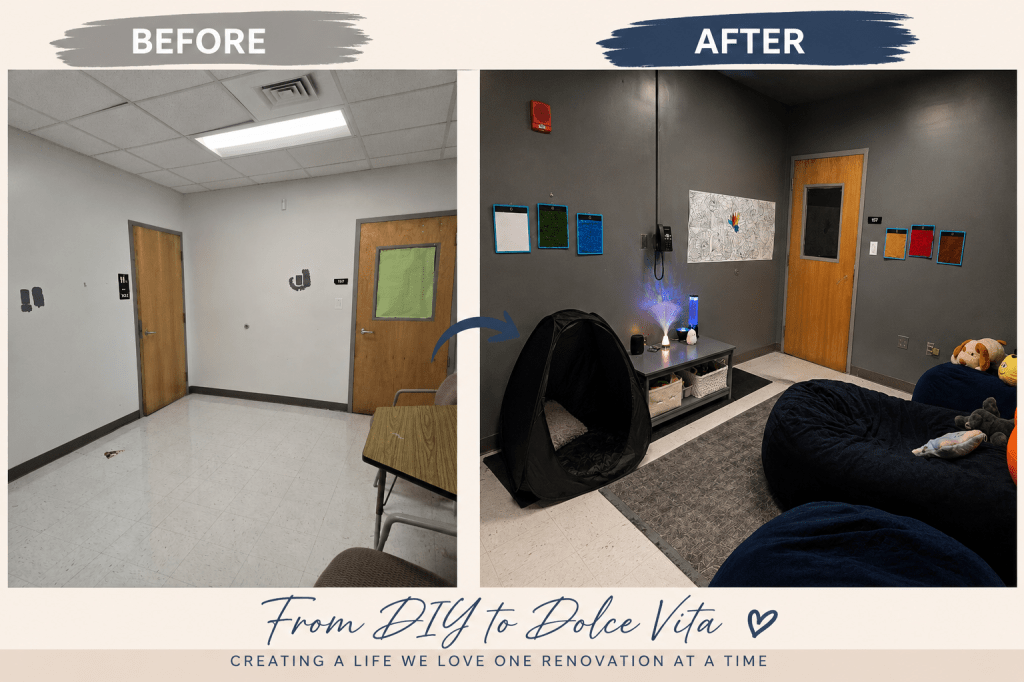
I am an ESE teacher, and I am also the ESE department head at my school. I was going to speak to one of my teachers and just happened to walk in when I saw the teacher trying to calm one of our students down. Despite the teacher using all the right techniques, being patient and using a calm voice, the student didn’t calm down. It dawned on me that it wasn’t the teacher, she was amazing, it was the room. It was undermining everything she did. The atmosphere was completely wrong for this student who is on the spectrum. It was brightly lit with fluorescent lights and white walls. There were hard chairs and bare walls. I didn’t like to go there, let alone a student who can be easily overstimulated by a harsh environment.

Seeing the Potential
This room is very small and really lacked a purpose. It was crying to have meaning for its existence, and I saw its potential. It is perfectly situated between two access classrooms, like a pass through. The room was begging to have a purpose, and I was determined to solve a huge problem that ESE teachers are faced with, how to help our overstimulated students. It is difficult to find a quiet space in a school. Let’s face it; kids are loud, adults too.
This room was perfect, (perfectly ugly). My first step was to ask my principal for permission to use this space. I was lucky to have an ESE friendly principal who saw merit in my idea. She even offered to pay for the painting supplies. (Two gallons of paint for $120 and I brought the other stuff from home).

Research Comes First
I didn’t just randomly pick the paint colors or other items, I did research. When I don’t know something, I go to the experts. I used sites that were specific to sensory rooms for autistic students. I can say I learned a lot and got some great ideas. There was a problem though. This was going to be expensive. The things I wanted would in total be over a thousand dollars.

Discovering Donors Choose
Don’t forget I’m a teacher so that wasn’t going to happen. What was I going to do? Again, research helped, and I learned about Donors Choose. I have heard about it but never really looked too much into it before. If you are a teacher and haven’t gone on there, stop what you are doing and look right now. Okay, that might be a bit extreme, I am a little extra. When you have time, peruse the site.

Winning Over the Team
So, I have my research, I have a plan for raising the money, and ideas for the room. It was time to bring it to the teachers and paraprofessionals who would most benefit. I was not met with the excitement I was hoping for. Instead, I was met with cautious optimism some might call it skepticism (potato /tomato). To be fair, I was new here. I just joined the school that year and they didn’t know how determined I can be and add to that we teachers are used to hearing big ideas without seeing follow through. So, I knew I had to put up or shut up.

Building the Wish List
Research in hand, I created my Donors Choose page to shop. I preferred to choose items from their site instead of creating a budget and having to shop elsewhere. It just seemed easier to me, and they had a great selection and gave suggestions.
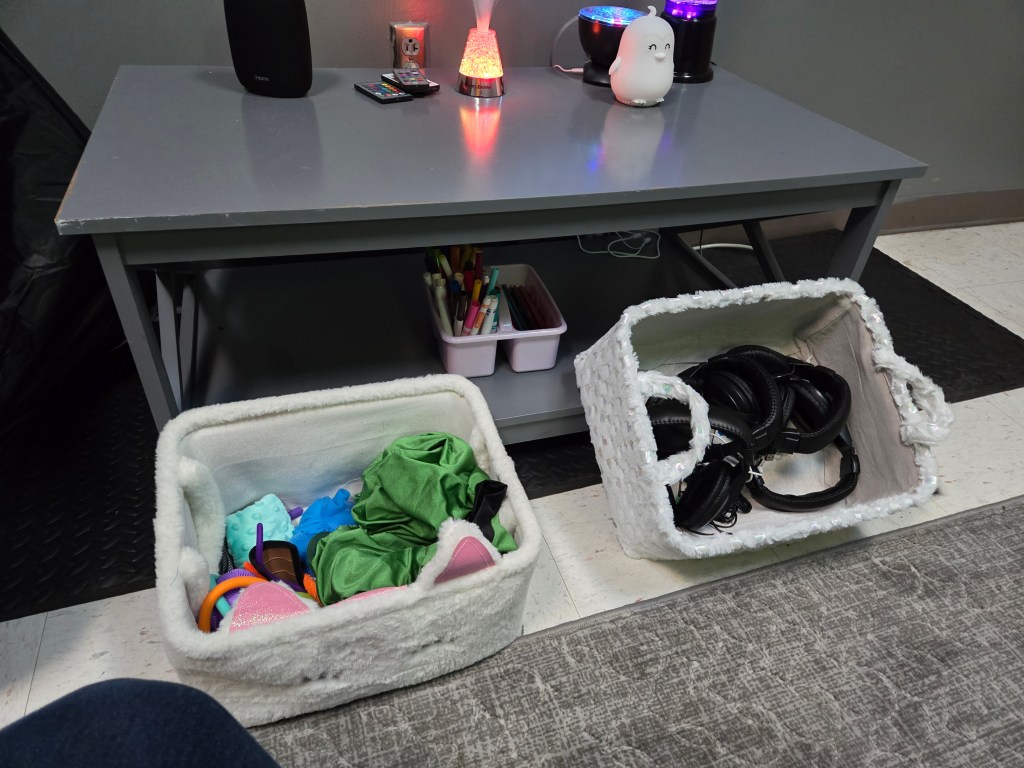
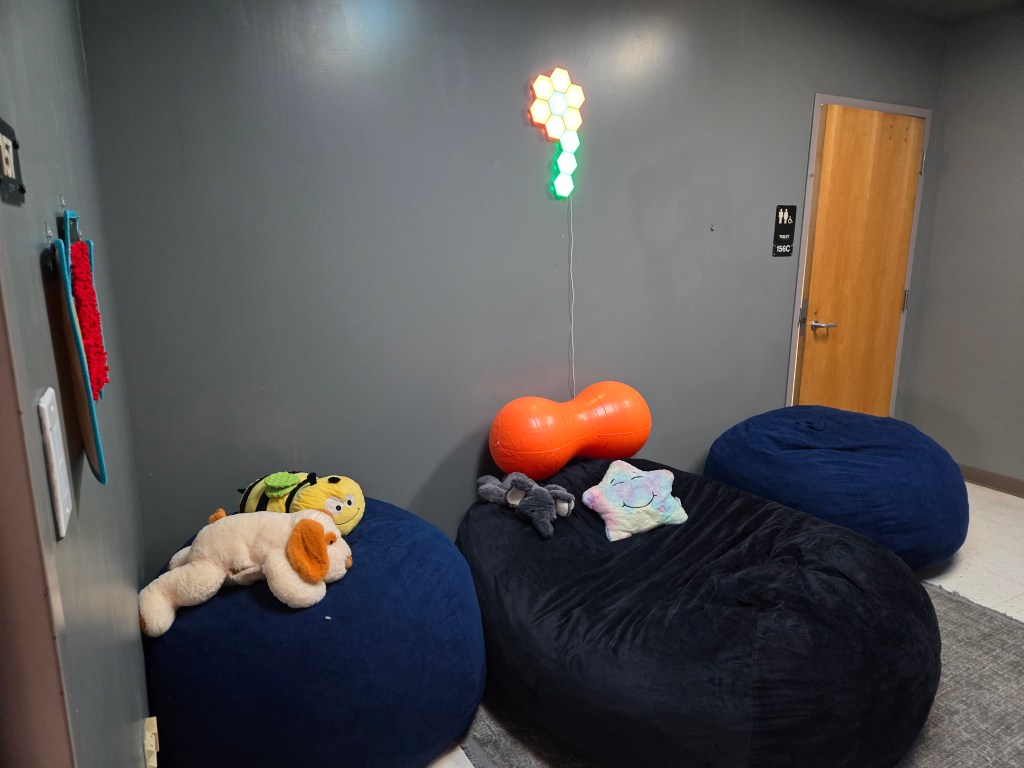
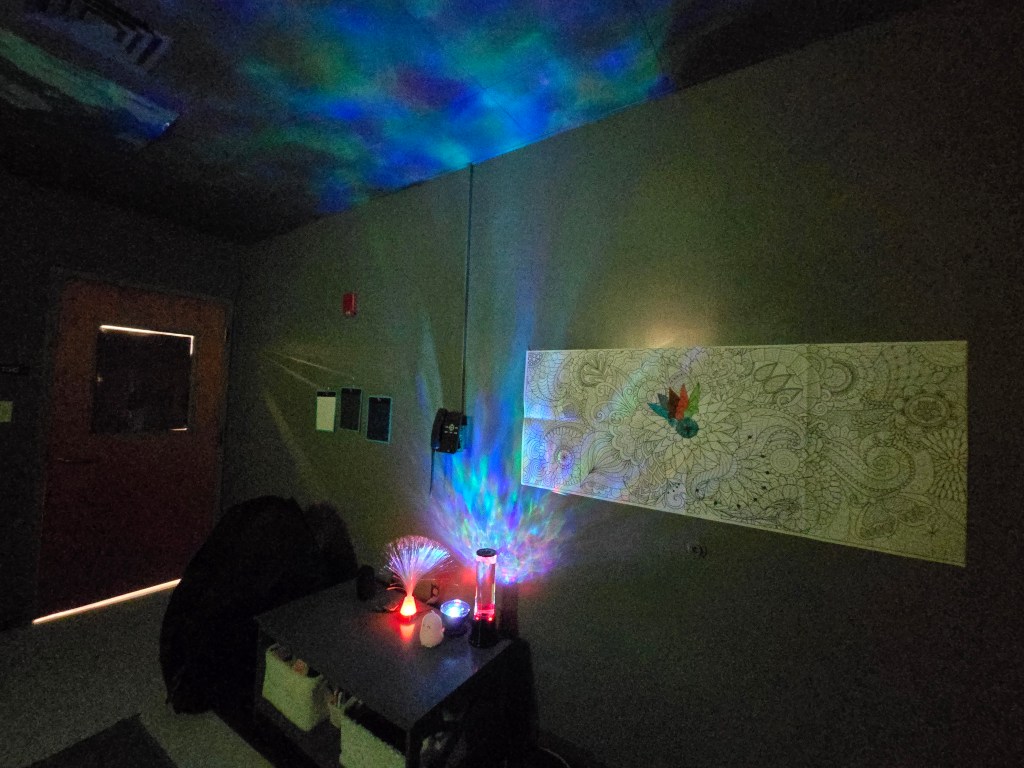
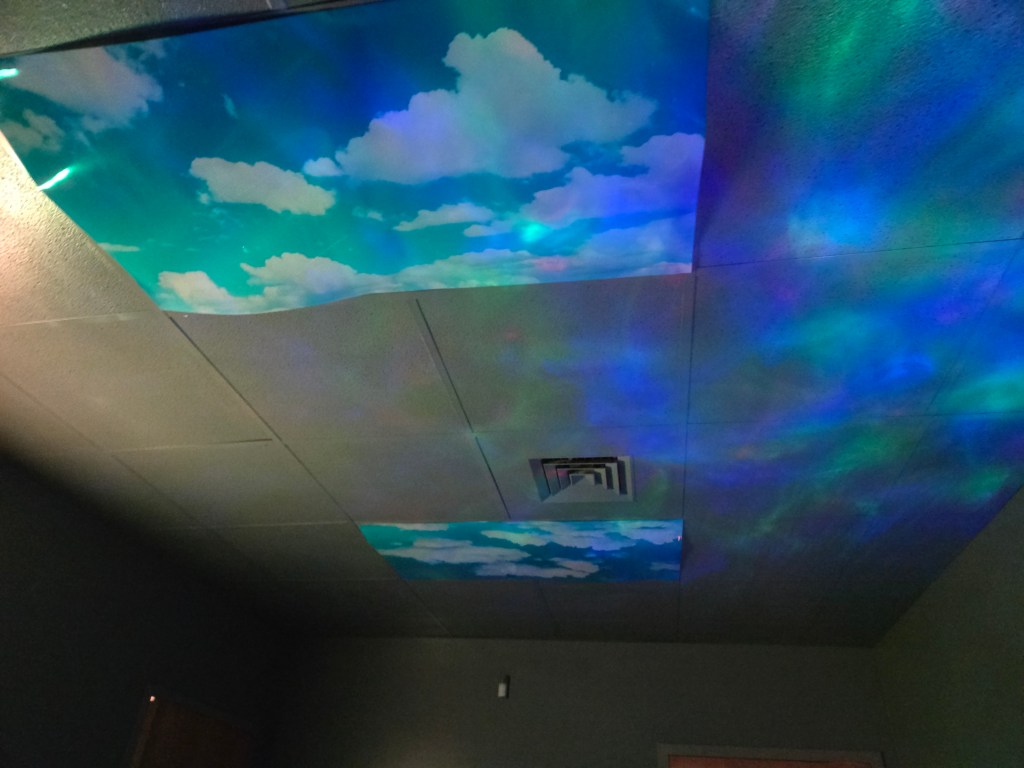
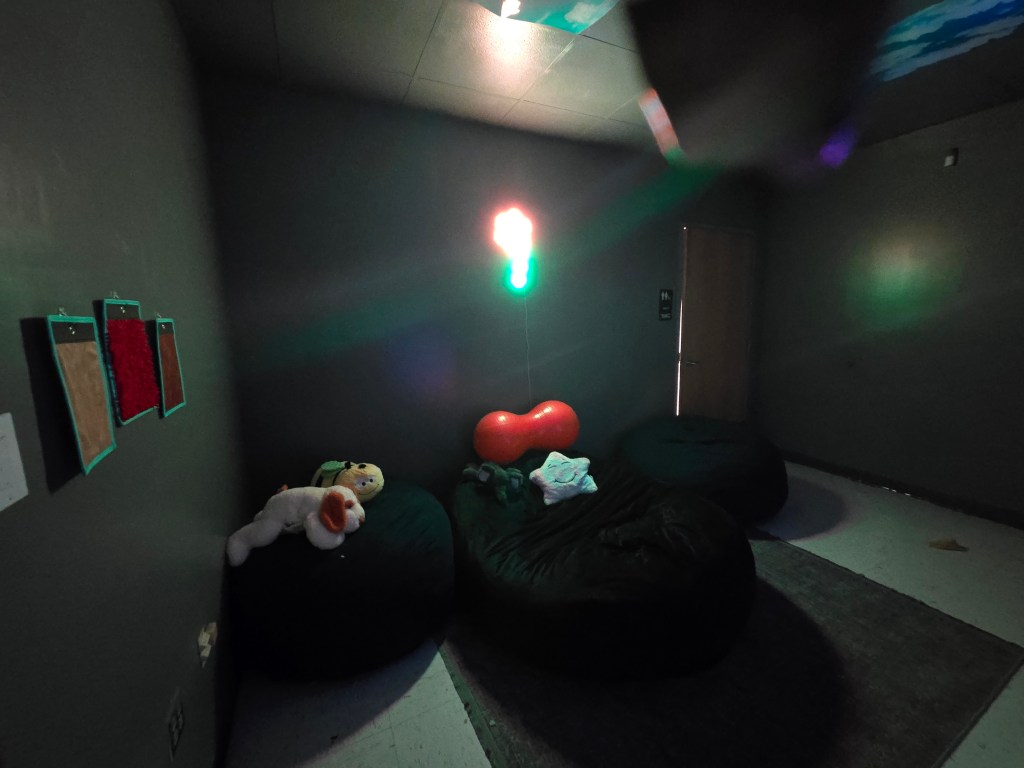
I put two regular bean bag chairs and a loveseat size one on my list. Hard chairs not very soothing, bean bag chairs for the win! Fluorescent lights- yuck! Covers for them, yes please. Sounds of nature sound machine who doesn’t love that, shaped like a penguin, dying here. If it is going to sound like nature let’s bring nature in. I chose a weighted soft elephant to hold and a vibrating bumble bee. Touchable lights, I’ll take two. One you press on and off and can make shapes the other are fiber optic strands, fun with purpose. The mood is set but what else do they need? I ordered items that provide comfort. There is the pea pod that they sit in, and it provides gentle pressure. It looks like a snug blowup canoe. A small tent for someone who needs a little extra quiet. There are soft unicorn bins that are filled with fidget toys and sensory touch pads for the wall. And who doesn’t love a giant Zen coloring page? Sold!

The Reality Check
I know that’s a lot of items. It’s easy to spend when it’s not your money and I love to shop. It might be one of my superpowers. But let’s back up a step. I didn’t actually buy these items; I created a wish list for people to donate money towards. I submit the project, and it gets approved. Oh, look at the helpful advice, did that say you should try to stay in the $300 range to get funded. Put a 1 in front of that and a little more for my project. Oops too late it’s already approved.

Waiting for Funding
Now the waiting and obsessive checking begins. Donations start to trickle in, but it’s a big project. Donors choose gives a two week double your donation window. I even donated to my project because come on they doubled it. BOGO for the win.

Life Happens
I must admit, I am an optimist. I focus on the positive, don’t know if it is the name or my nature. Chicken or the egg sort of thing. So, imagine my shock when I didn’t get my funding by the end of the school year.
Life has a way of stepping in and refocusing your energy, and it sure did for me.
My husband ended up going in for spinal fusion surgery in June. Thankfully, I was out of school and could take care of him.Sensory room firmly on the back burner of my brain.
We were in the Va hospital for 10 days. He was slowly making progress, and we were thinking positively. Home for 2 weeks with many trips to the VA for follow ups and physical therapy. What the heck is that? Back in he goes for a second surgery to clean out the infection along with massive doses of WMD antibiotics to kill it. I have to say, not my favorite summer break. There were a few positives. Most of the VA staff were awesome and took great care of us. There were a few negatives interactions, but they were rare, and I say you never know what people are going through. So, give people grace.
The other bright light? I got notified my project got funded!!! The items will be delivered when school opens. WOOHOO!! I mean woohoo, it’s 3am and Eric is sleeping. Can’t call anyone. Damn! Oh wait! the nurses. So off I go to the nurses’ station to share my news and do a happy dance.
Now put the sensory room back on the back burner until school starts.

Bringing the Room to Life
First day of school I share my news with the team and get the response I was hoping for the first time. Everyone was quick to volunteer to help set it up. I must admit I jealously saved the unboxing for myself. It was like opening Christmas presents. I became more and more excited as I continued unwrapping, I mean opening boxes.
It may have been my idea but putting it together was a true team effort. Based upon the suggestions online I chose a gray paint for the walls. The paraprofessionals started painting during their free time. My son came in with our paint sprayer to finish it up. These are great time savers, and the paint really goes on smoothly.
The day after painting I had to attend professional study day and that’s when the magic happened. Bean bags were in place, lights set up, the sweet sounds of nature playing, and the light covers in place. The galaxy light projecting on the ceiling adding a soothing touch. Bins and toys lovingly placed for impact and the sensory panels and Zen coloring on the wall. The paras had spent the day putting the whole room together so it would be ready before school started. After the initial joy of seeing everything in the room I noticed a glaring mistake. The bright white floor. It needed a carpet. Off to Ross I went and bought a carpet for $35. Bringing the grand total to $155.
The paraprofessionals are a school’s unsung hero. They bring heart to the school and our students. We teachers may have a vision, but they help us make it work, especially in access classes.

One Year Later
It’s been over a year since the room has been set up. There are some things I would do different. The light covers are vinyl, which are very difficult to put up. I would definitely go with the fabric covers with magnets. I did in fact order them for my classroom which has 13 fluorescent likes. They were much easier to hang and more pattern choices. I would also get rechargeable lights and sound machine. The cords for some items were broken and need to be replaced. But overall, I think the room has been a success. The kids love it. The teachers use it and one mom during open house cried when she saw it.

Here’s the wonderful thing about a sensory room—it doesn’t have to be a room. It can be a pop-up tent filled with plushies, weighted blankets, books, fidgets, and a soothing sound machine with calming lights. Sometimes all it takes is a small, quiet corner where a child can slow down, breathe, and reset.
Sensory spaces aren’t just for people on the autism spectrum. Any parent has experienced an overstimulated toddler, and many older children—and adults—can benefit from having a peaceful place to regroup. The goal isn’t to create a Pinterest-perfect room. It’s to create a space that helps someone feel safe, calm, and cared for.
A Legacy of Joy
We all hope to make a difference in someone’s life. This room is something I am incredibly proud of because it has become a sanctuary for students who carry their own storms inside. It has brought comfort, peace, and moments of calm when they needed them most.
As I begin thinking about retirement, I hope this room becomes part of the legacy I leave behind. Long after I leave the classroom, it will still be there—helping students, supporting teachers and paraprofessionals, and reminding people that sometimes the biggest difference begins with a small idea and a little compassion. After all, joy isn’t always found in grand gestures. Sometimes it’s found in the smallest of places.
Step inside the sensory room.


Leave a comment